
The start of a new year is when many practices reassess growth. Not just revenue growth, but clinical growth. Program maturity. Patient outcomes. In pediatric eye care, few areas deserve that reflection more than myopia management.
As myopia prevalence continues to rise, the question is no longer whether to intervene, but how early, how consistently, and how accessibly intervention begins. The recent FDA approval of Stellest lenses marks a meaningful shift in that conversation and sets a new tone for how myopia care can evolve in the year ahead.
On September 25, Stellest became the first FDA-approved spectacle lens in the United States indicated to slow myopia progression in children. That milestone arrives at a moment when practices are actively looking for ways to expand care responsibly, reduce friction for families, and build sustainable specialty programs.
Why This Matters as Practices Enter a New Year
For years, myopia management in the U.S. has relied primarily on three interventions:
-
Orthokeratology, highly effective but dependent on nightly compliance and family readiness
-
Soft myopia control contact lenses, excellent for many children but requiring maturity and hygiene awareness
-
Low-dose atropine, well-supported by evidence but still perceived by some families as a significant step
Each option remains valuable. Each also presents barriers that delay adoption for certain patients.
Stellest introduces a different kind of growth opportunity. It allows practices to begin managing myopia earlier, with less perceived risk, using a format families already understand: glasses.
From a patient education standpoint, this matters. When families feel overwhelmed at the outset, care is often deferred. When the first step feels familiar and achievable, long-term engagement improves. Entering a new year, that shift alone can reshape how many children receive care rather than simply stronger prescriptions.
The Technology Behind Stellest, in Practical Terms
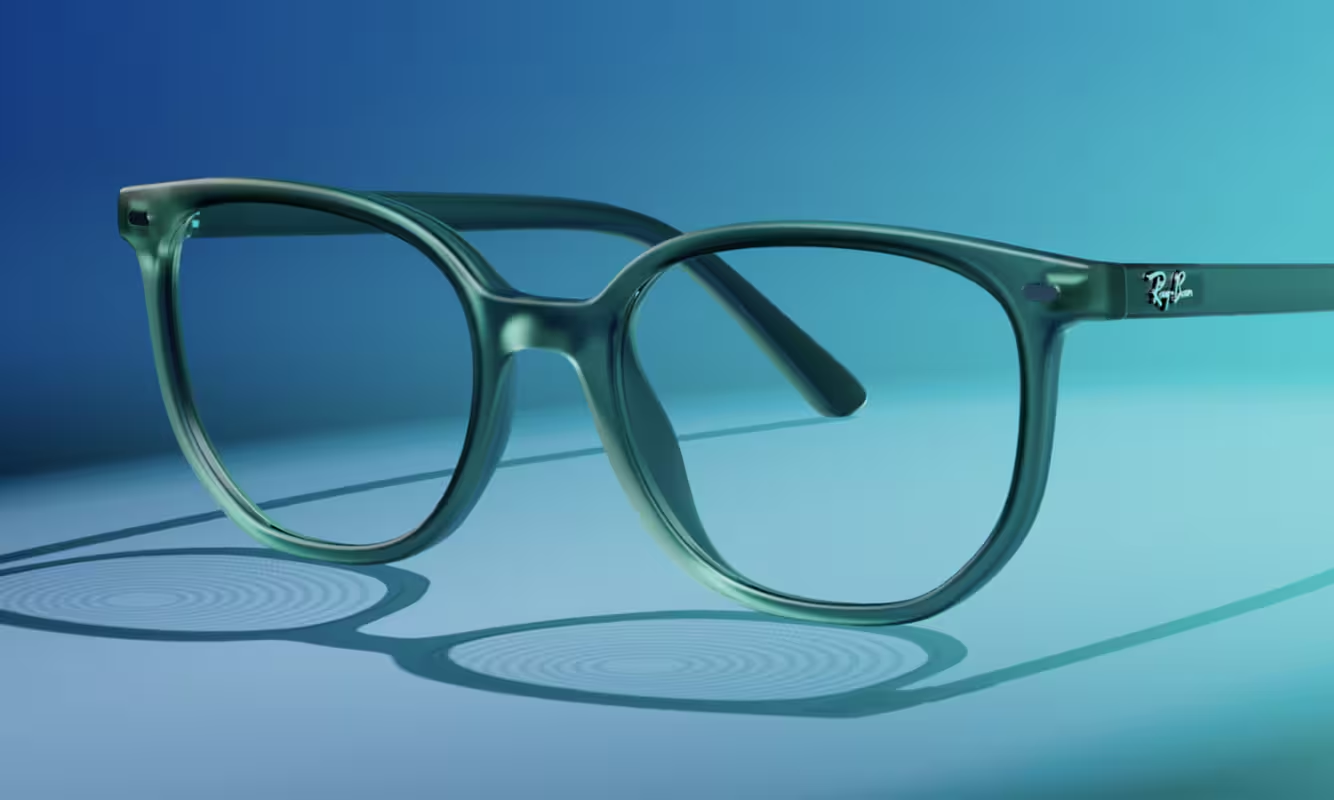
Stellest lenses use HALT technology (Highly Aspherical Lenslet Target) to deliver peripheral myopic defocus while preserving clear central vision.
Clinically, this means:
-
A clear central zone for everyday visual tasks
-
Surrounding lenslet rings that alter peripheral retinal focus
-
A signal that discourages excessive axial elongation, the structural driver of progressive myopia
The design supports what growing eyes need most: clarity for daily life and control in the background.
Evidence That Supports Long-Term Planning
Data supporting Stellest is not incremental.
U.S. clinical trials over 24 months demonstrated:
-
71% reduction in spherical equivalent progression
-
53% reduction in axial length elongation compared to single-vision lenses
Five-year international data shows sustained efficacy closer to 50%, consistent with other established myopia control modalities.
For practices setting goals for the year ahead, this matters. These outcomes support proactive planning rather than reactive prescription changes.
Growth Requires Consistency, for Eyes and Programs
One parallel worth emphasizing at the start of the year is that growth, whether clinical or biological, depends on consistency.
Stellest lenses are designed for full-time wear, ideally 12 or more hours per day. The treatment effect is dose-dependent. Glasses worn inconsistently do not deliver consistent control.
Practices that frame Stellest as a medical intervention rather than “better glasses” see stronger adherence and clearer expectations. That clarity sets the foundation for successful outcomes throughout the year.
Where Stellest Fits in a Modern Myopia Strategy
As practices refine their specialty offerings, Stellest fits naturally into several clinical scenarios:
-
Early intervention for young children showing myopic shift or risk factors
-
Children with higher astigmatism not well suited for contact lens-based control
-
Families hesitant to begin with contacts or pharmacologic treatment
-
Combination therapy alongside low-dose atropine
-
Backup glasses for orthokeratology patients during travel or treatment breaks
Rather than replacing existing modalities, Stellest often becomes the starting point that allows programs to grow more systematically over time.
Practical Considerations That Reduce Friction
Operationally, Stellest lenses support real-world workflows:
-
Prescription range from +2.00 to –12.00
-
Quarter-diopter steps up to –4.00
-
Availability with transitions and anti-reflective coatings
-
Typical retail pricing around $450
-
One complimentary remake within nine months for prescription changes
That flexibility reduces hesitation for families and allows practices to confidently recommend full-time wear.
Resetting How Myopia Is Explained to Families
A new year is also an opportunity to reset messaging.
Parents do not need technical explanations during a routine exam. What they need to understand is:
-
Their child’s eyes are growing in a way that increases long-term risk
-
Progression is not inevitable or untreatable
-
There is a simple, evidence-based option that fits their child’s life today
Detailed education belongs in a dedicated consultation, where expectations, wear time, and follow-up can be addressed thoughtfully.
Practices seeing the highest acceptance position Stellest as:
-
A first step into active management
-
A solution that can evolve as the child grows
-
Part of a long-term care plan, not a one-time decision
Building Momentum Throughout the Year
Early observations from practices adopting Stellest reveal consistent themes:
-
Parents feel relief rather than pressure
-
Engagement improves once axial length data is tracked and reviewed
-
Trust builds as families see stability over time
-
Some families later layer or transition to other modalities, already invested in the process
In many cases, Stellest becomes the entry point that transforms myopia from a passive condition into an actively managed one.
The Lens Is Only One Piece of Sustainable Growth
As with any specialty service, long-term success depends on structure:
-
Baseline and follow-up axial length measurements
-
Clear education around risk and expectations
-
Scheduled progress visits
-
Reinforcement of adherence
The technology enables control. The system sustains it.
Looking Ahead
A new year brings new opportunities to raise the standard of care. Myopia progression is not slowing, but the tools to address it are expanding. FDA-approved Stellest lenses represent a meaningful step toward earlier intervention, broader access, and more confident program growth.
For practices entering the year focused on improving outcomes rather than simply reacting to change, Stellest offers a practical way forward.
At Hoot’s Specialty Treatment Success Center, the pattern is clear: when care is accessible, understandable, and systemized, more children receive meaningful intervention. Stellest helps make that possible and sets the tone for a year focused on smarter growth, for practices and for the patients they serve.