How Hoot Works for Dry Eye
What the eye care practice does on the left. What the dry eye patient experiences on the right.
The Doctor Makes the Promise and Hands the Patient the Handout.
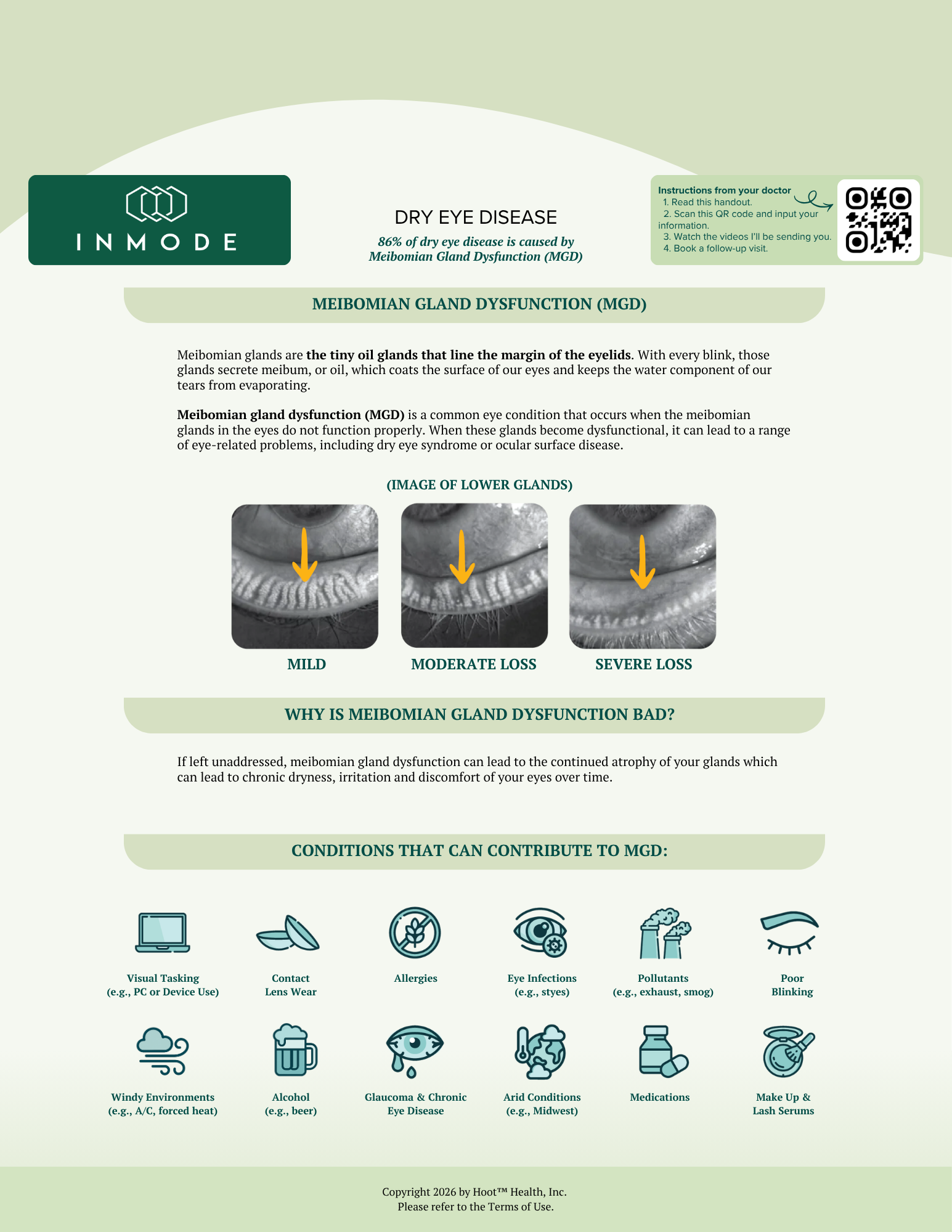
The doctor tells the patient to expect short videos via text and email, and hands them a branded handout before they leave the room.

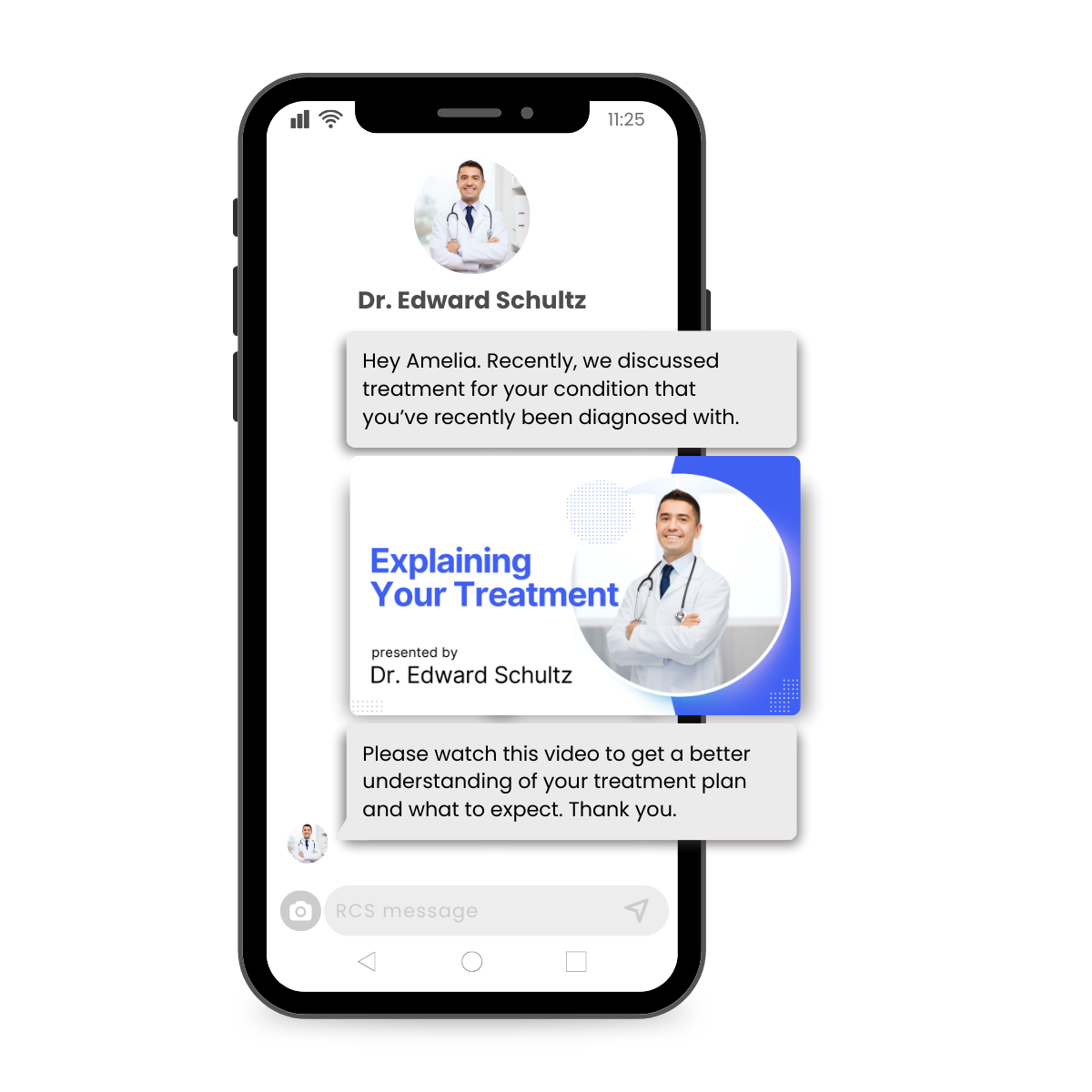
The Patient Receives Their Doctor's Videos via Text and Email
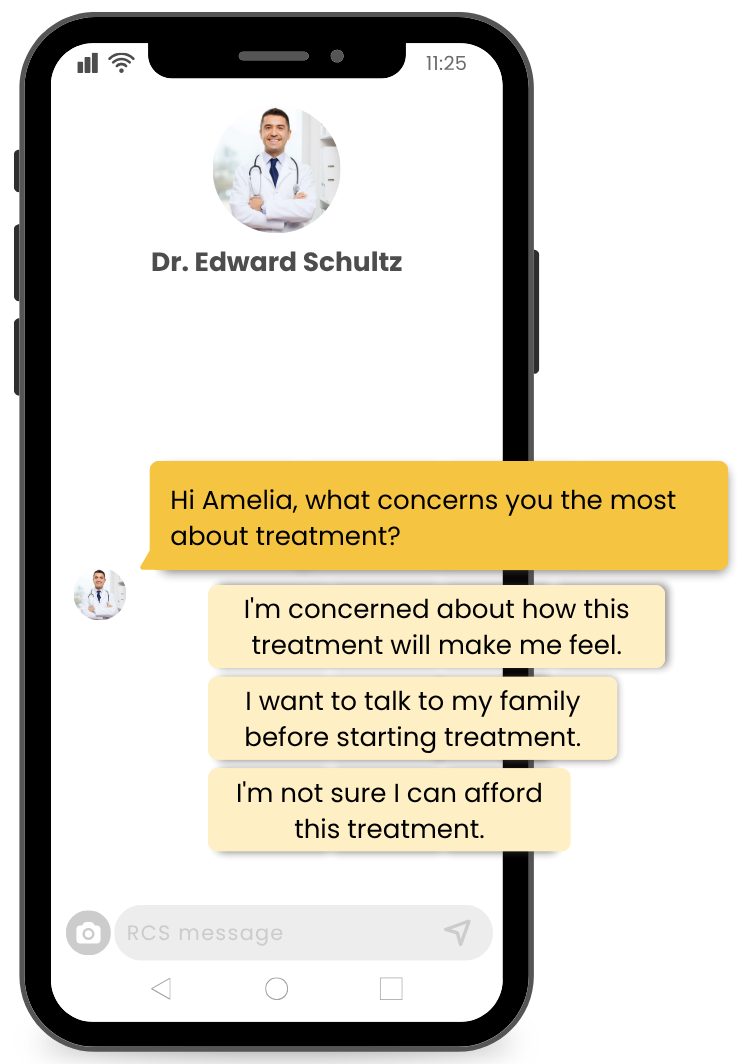
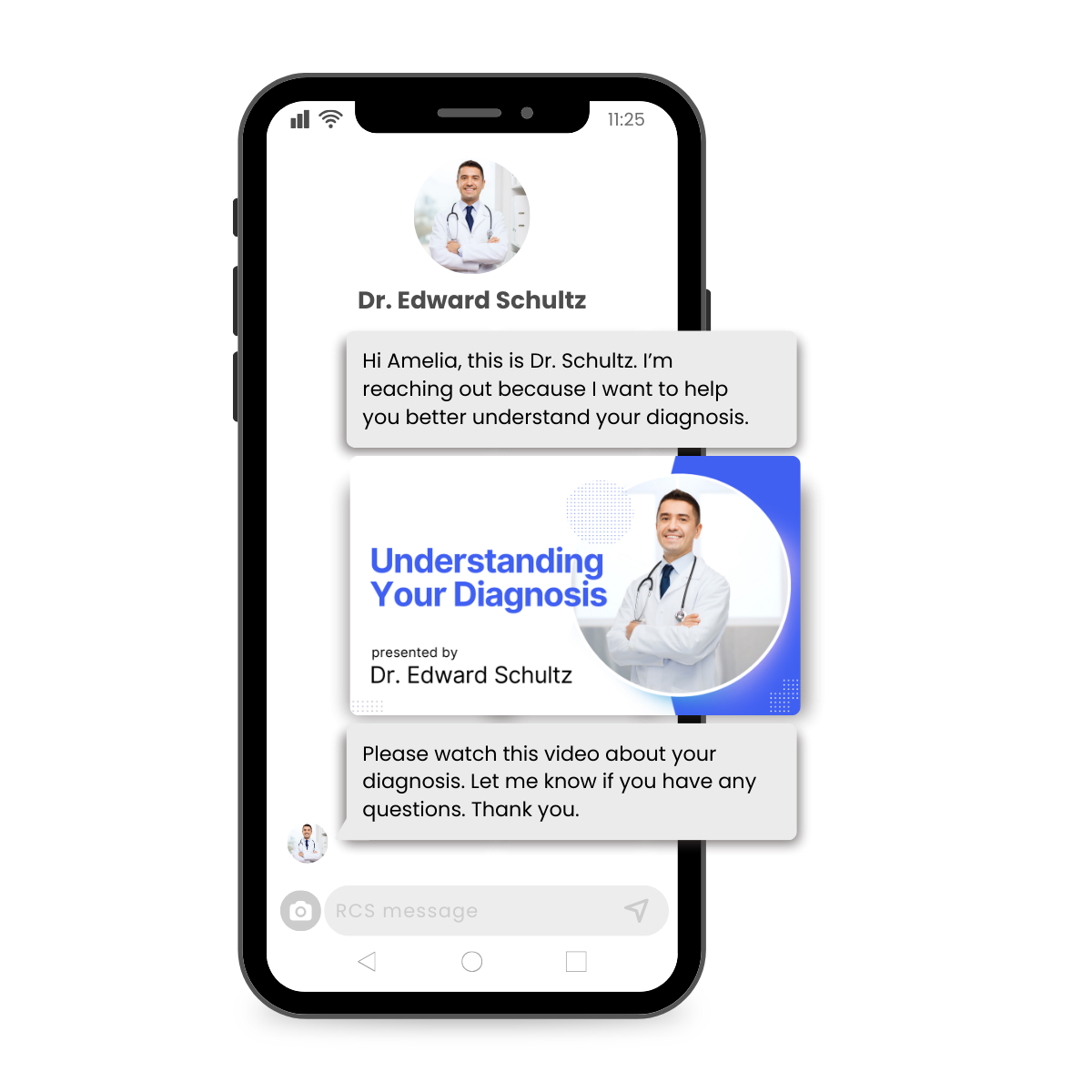
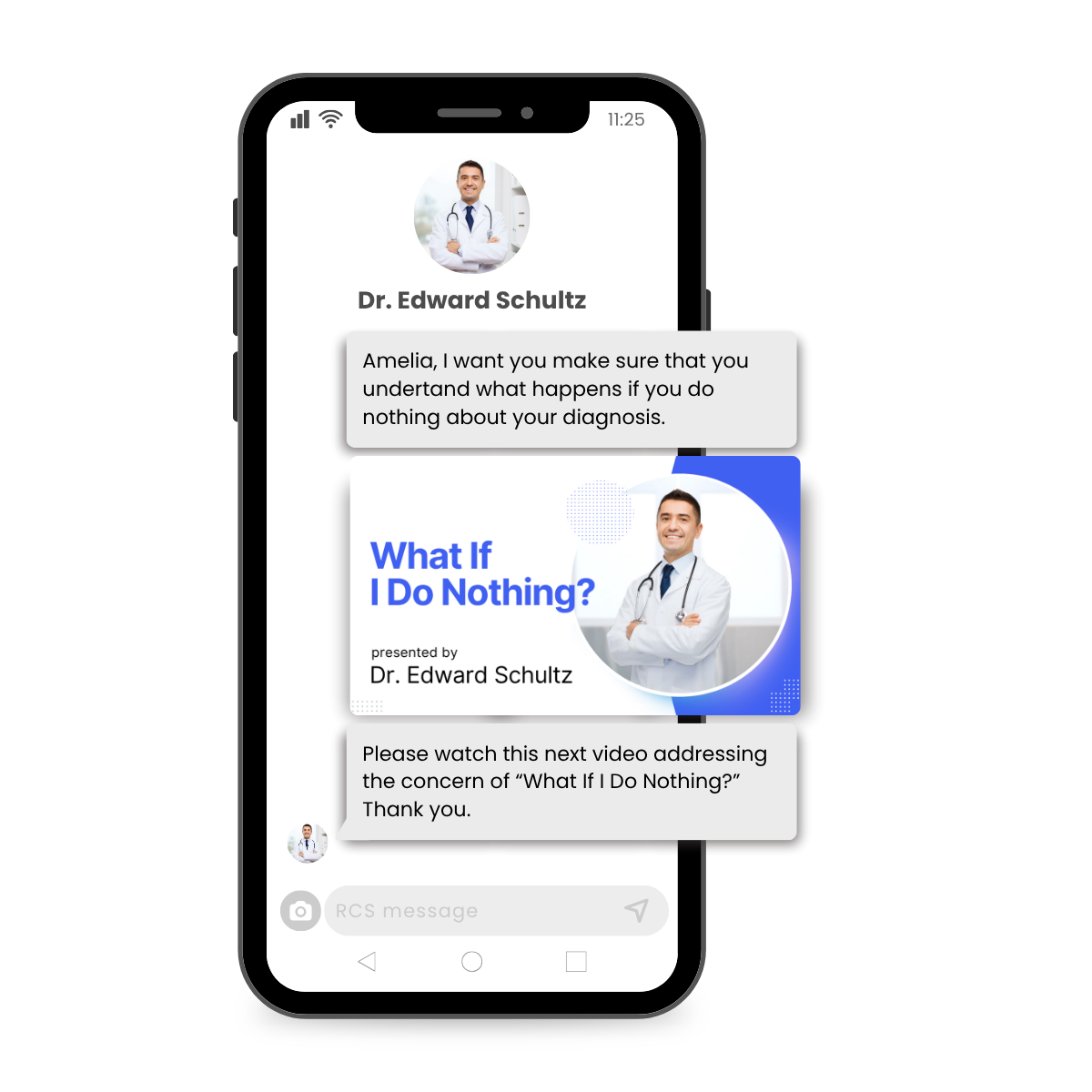
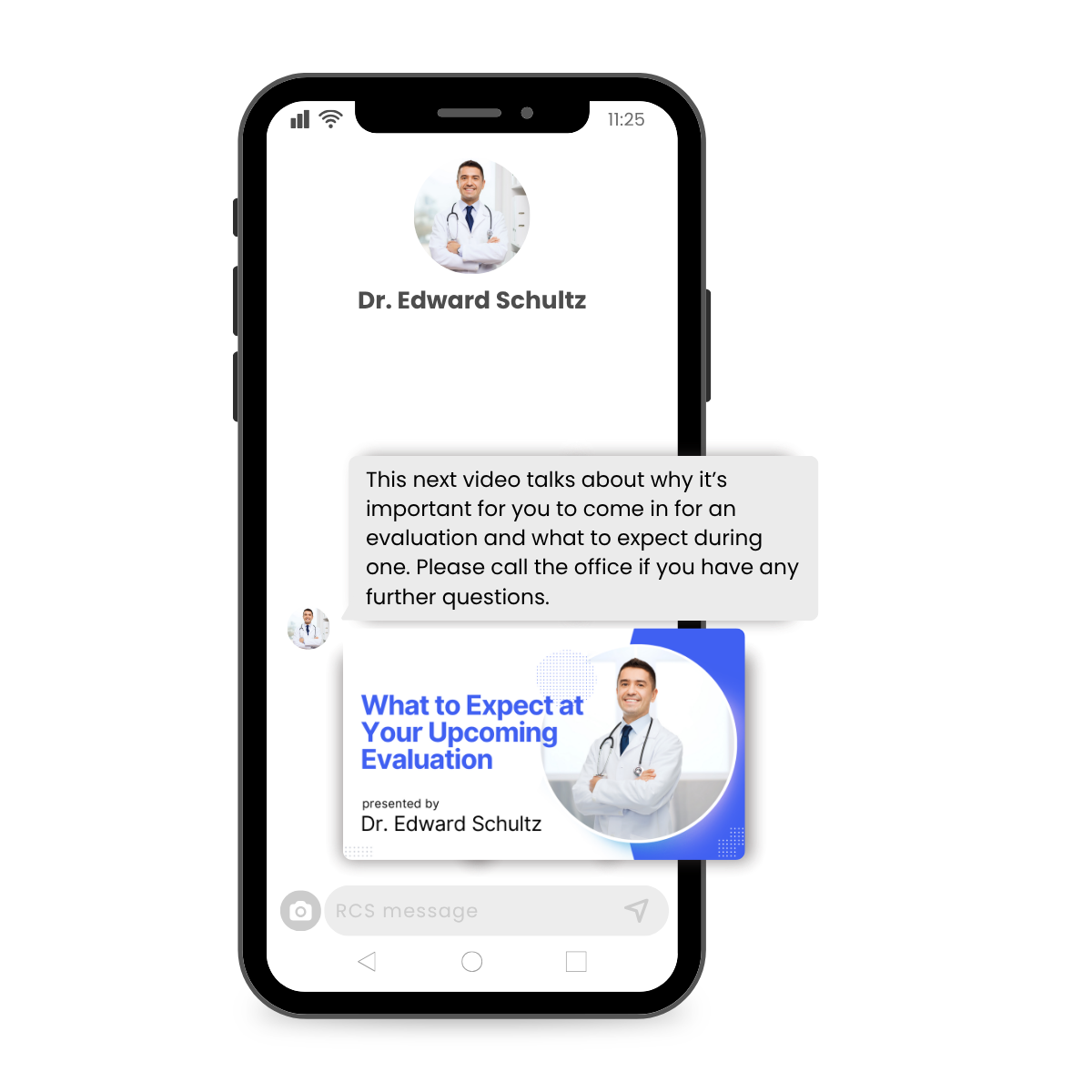
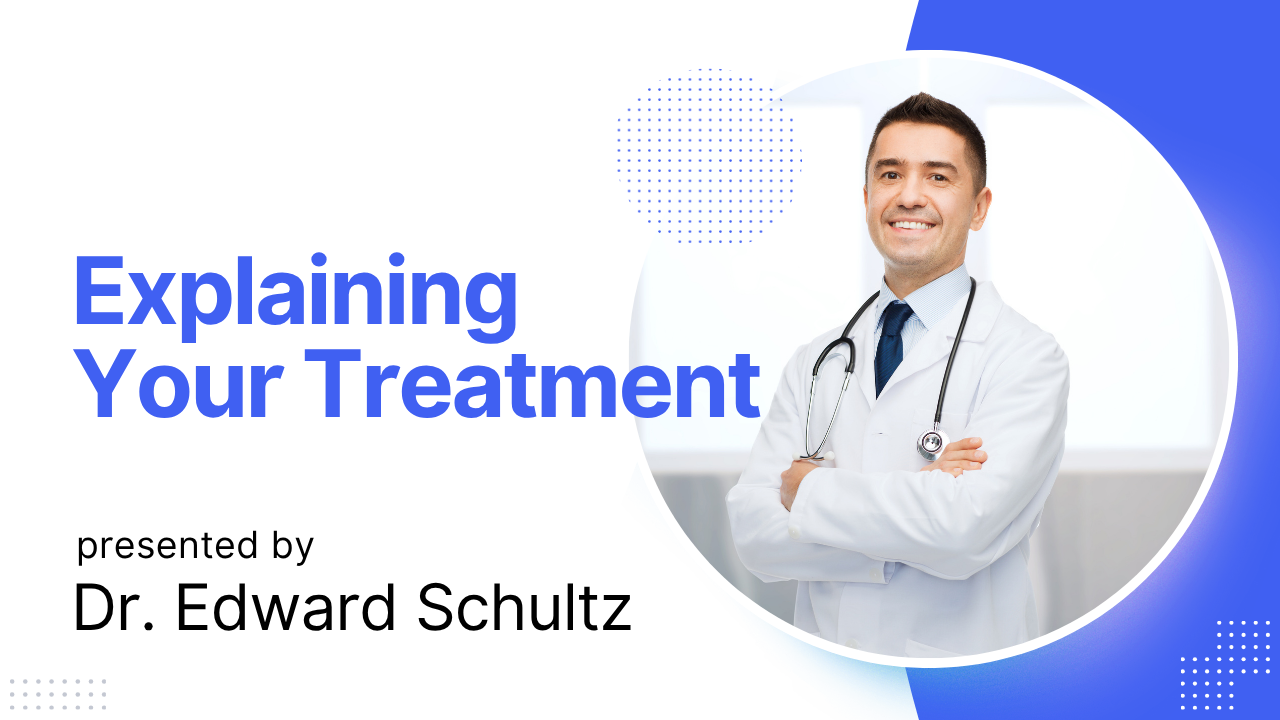
Over 7 days, short videos arrive from the doctor. No app. No portal. Each video ends with a quick survey.
Hoot Identifies Barriers and Responds Before They Become Drop-Offs
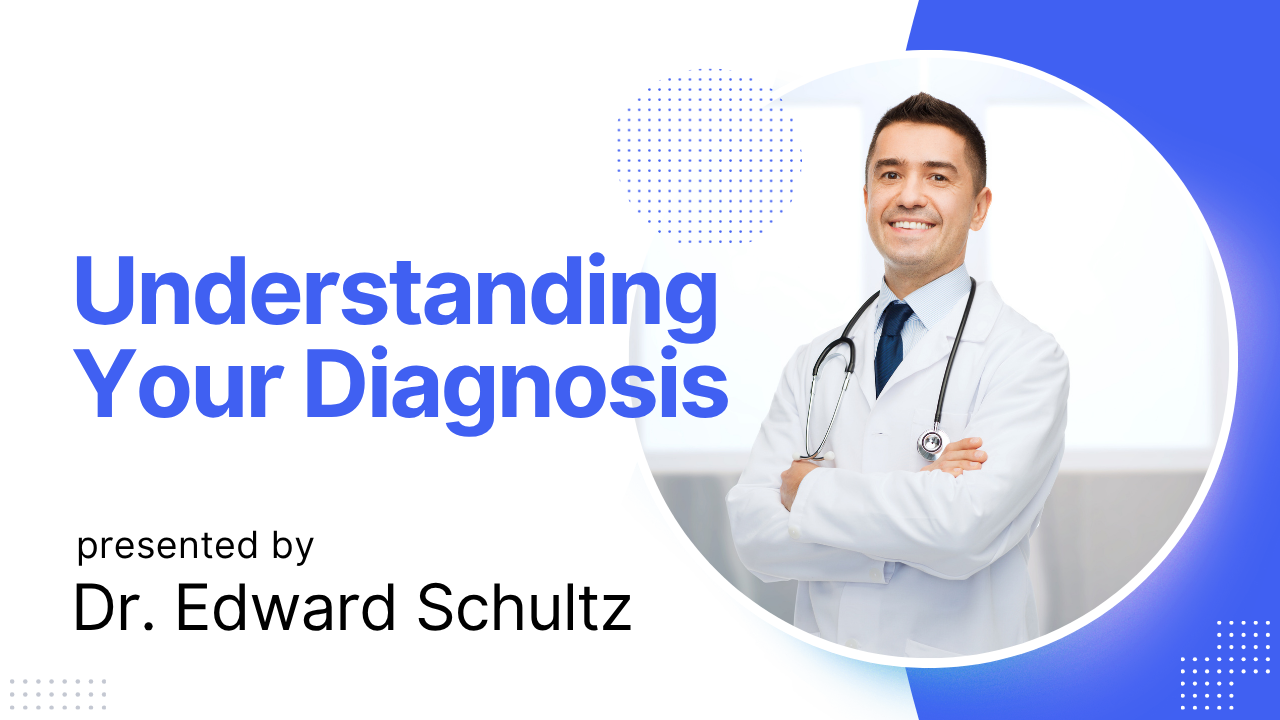
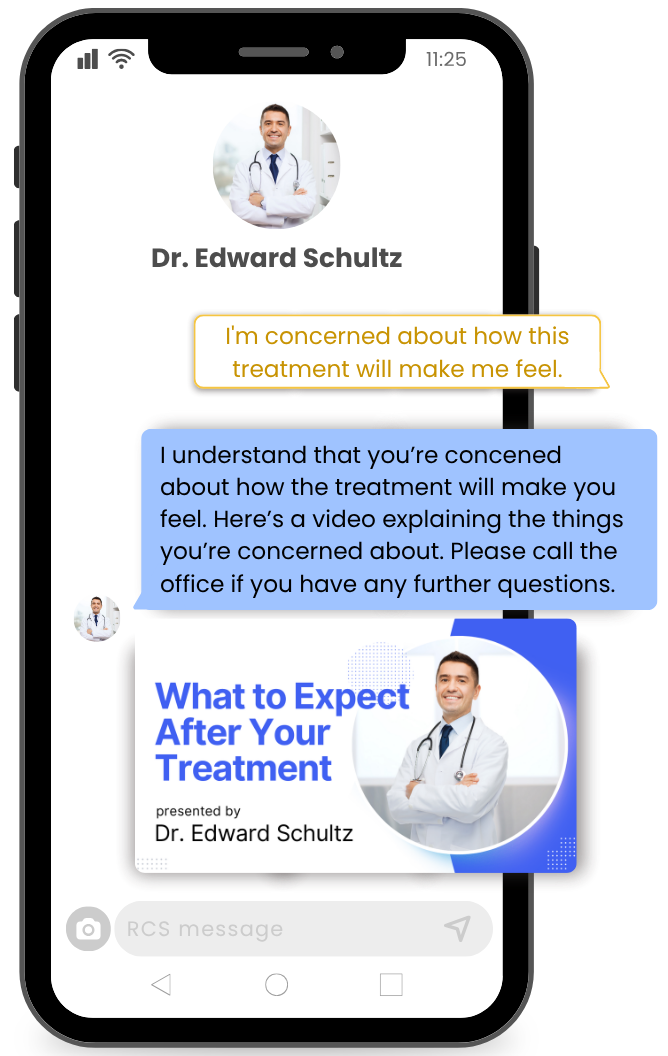
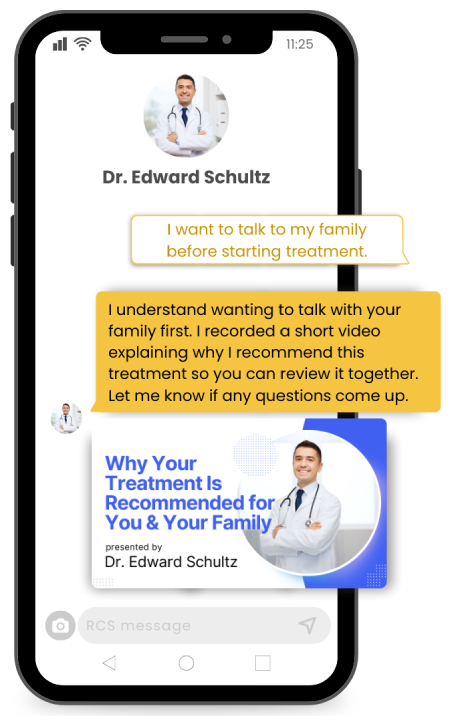
Survey responses are analyzed after each video. If a barrier is detected, Hoot sends a targeted follow-up via text and email within 2 hours. No one on the team has to do anything.
Patient selects: "I'm not sure what the in-office treatment actually involves."
Hoot sends a video covering what the first week on [Medication] feels like, which side effects are normal, and when to call the office.
Patient selects: "I'm not convinced this will actually help my symptoms."
Hoot delivers a video addressing why the doctor recommends this treatment, what the family should know, and a real patient sharing their experience.
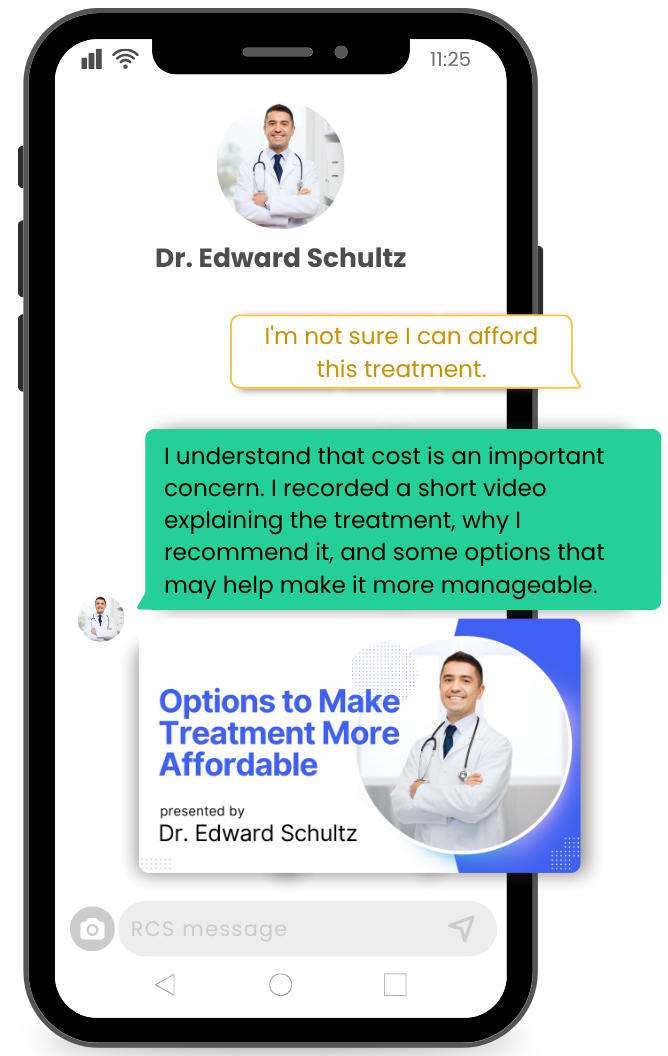
Patient selects: "I'm not sure if my insurance or FSA covers this."
Hoot follows up with a video explaining FSA and HSA eligibility for dry eye treatment, available financing options, and a breakdown of the long-term cost of leaving MGD untreated.
What Hoot's Worth to a Practice?
Based on an eye care practice seeing 100 new dry eye patients per month with an average treatment value of $1,500.
The bottom line: The difference between a dry eye diagnosis and a patient who follows through is a patient who understands what is happening in their eyes. Hoot delivers that understanding automatically, and the numbers show it.
Ready to Get Started?
Hoot handles the dry eye campaign design, video production, automated messaging setup, and staff training. All we need is your go-ahead.
Let's Get Started