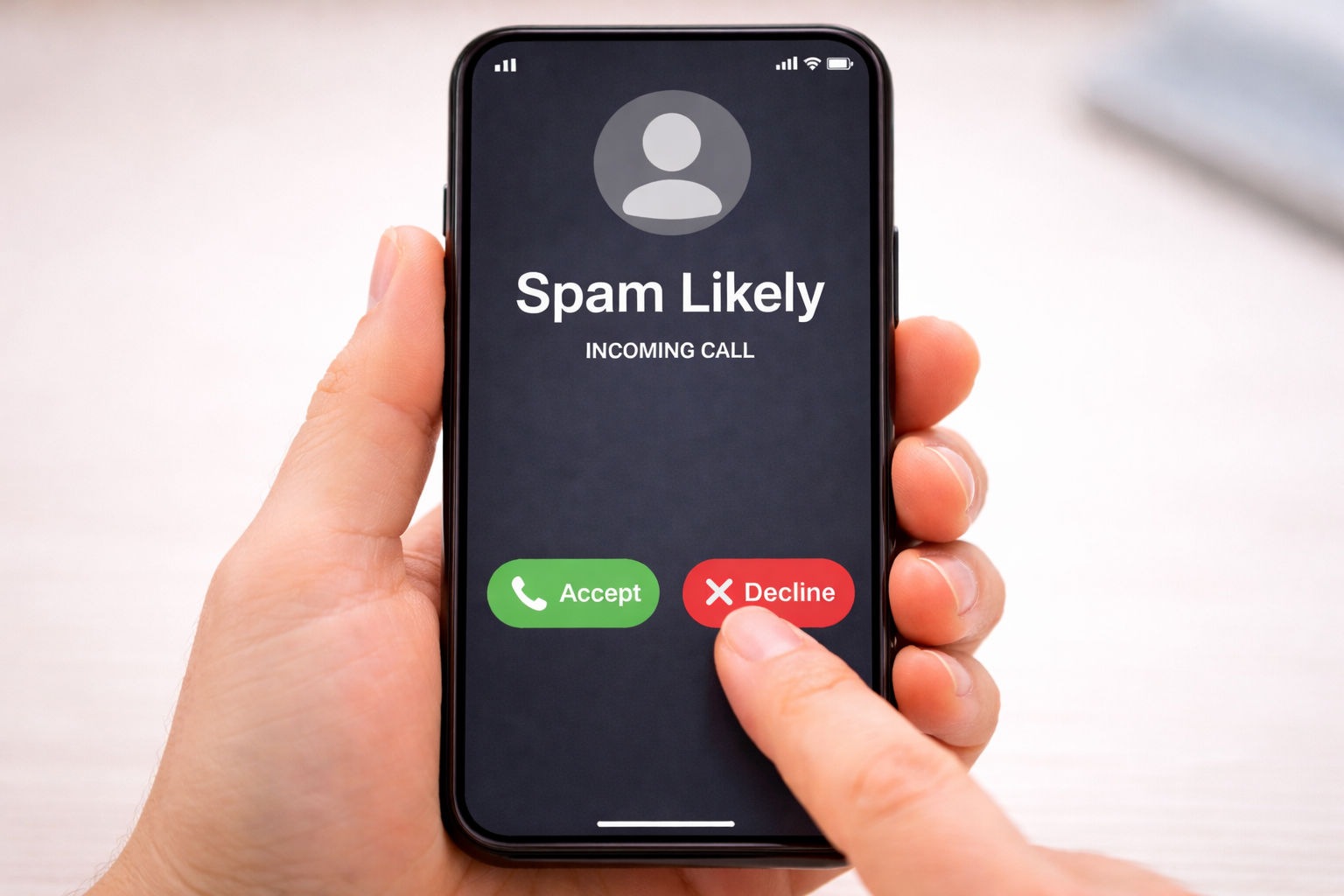
Pharma has invested billions into patient services over the past decade. Call centers, hub programs, nurse educators, and enrollment teams have all been built with the same goal in mind: help patients start and stay on therapy. On paper, the infrastructure is strong. In reality, it is quietly breaking down.
The issue is not effort, funding, or even strategy. It is something far more fundamental. Patients are no longer answering the phone. And that single behavioral shift is creating a ripple effect across access, enrollment, and adherence.
The hidden force changing patient behavior
In Q1 2026 alone, Americans received approximately 7.7 billion robocalls. That level of volume has reshaped how people interact with their phones. What was once a neutral communication channel is now treated with skepticism.
Today, 80% of patients avoid calls from unknown numbers, and 92% assume unidentified calls are fraudulent. This is not a minor preference shift. It is a collapse of trust in the phone channel itself.
Now consider how most patient services hubs operate. They rely heavily on outbound calls from unfamiliar numbers, often using standardized scripts. In the current environment, those calls are indistinguishable from spam. The result is that legitimate healthcare outreach is being filtered, ignored, or blocked before it ever reaches the patient.
Patients are disappearing before therapy even starts
This shift has direct consequences on patient behavior. The most critical moment in the treatment journey is immediately after a prescription is written. This is when patients are deciding whether to move forward, and it is also when their uncertainty is highest.
Data shows that 27% of prescriptions are never filled, with specialty therapies seeing abandonment rates between 35% and 40%. For novel specialty medications, more than half of prescriptions may never be filled at all.
Patients are not making these decisions lightly. They go home, sit with family, search online, and try to make sense of complex clinical information. Questions around side effects, cost, and necessity quickly take over. If no one reaches them in that window with clarity and reassurance, hesitation turns into abandonment.
The problem is that the system designed to support them is trying to reach them in a way they have already learned to ignore.
Why call centers are structurally disadvantaged
Even before the robocall surge, healthcare call centers were under strain. Today, they are operating at a structural disadvantage.
Healthcare call centers experience:
- Call abandonment rates of 7–12%, with some reaching 30%
- Average hold times exceeding 4 minutes, far above industry targets
- Increasing instances of outbound numbers being flagged as “Spam Likely”
This creates a predictable breakdown in the patient journey. The patient does not answer the call, the hub cannot establish contact, enrollment is delayed, and confidence begins to erode. By the time a connection is finally made, if it happens at all, the patient may have already disengaged.
The multi-billion dollar enrollment gap
The financial implications are significant. Pharma invests more than $5 billion annually in patient support programs, yet only 3% to 8% of eligible patients enroll.
This gap is not primarily driven by lack of access to services. It is driven by lack of awareness. Patients cannot enroll in programs they never learn about, and they often never learn about them because the initial outreach fails.
This is the enrollment gap, and it represents one of the largest sources of lost value in the patient journey. Every missed connection widens the distance between prescription and therapy initiation.
Where the patient journey breaks down
The path from prescription to treatment is often described as a funnel, but in reality, it behaves more like a fragile chain. Each step depends on the previous one working as intended.
A typical breakdown looks like this:
- The prescription is written
- The hub attempts to contact the patient
- The call is ignored or blocked
- The patient remains uninformed about support options
- Delays increase uncertainty and doubt
- The prescription is never filled
Each missed interaction compounds the likelihood of abandonment. Even short delays can have a measurable impact, as every additional day reduces the probability that a patient will start therapy.
A necessary shift in strategy
If patients are not answering calls, the solution is not to increase call volume. It is to rethink how patients are reached in the first place.
The most trusted voice in healthcare has always been the physician. Patients may ignore unknown callers, but they do not ignore their doctor. The challenge is extending that trusted voice beyond the constraints of the clinical visit.
Why physician-led content changes the dynamic
When patients receive communication directly from their physician, the dynamic changes immediately. Instead of an unexpected phone call, they receive a message they recognize and trust, often delivered via SMS or email.
This approach offers several advantages:
- The message comes from a known and trusted source
- Patients can engage on their own time rather than in real time
- The content is visual, clear, and clinically grounded
- It bypasses call screening and spam filtering entirely
Importantly, this does not replace call centers. It enhances them. When patients are educated before the call, the conversation shifts from cold outreach to informed engagement. Answer rates improve, and enrollment becomes more efficient.
The compound impact across the patient journey
Introducing physician-led education creates a compounding effect across the entire journey. Patients are better prepared before the first outreach, more engaged during administrative delays, and more confident after starting therapy.
This leads to measurable improvements:
- Faster enrollment timelines
- Higher prescription fill rates
- Stronger adherence over time
- Greater return on existing patient support investments
The key insight is that education is not a single event. It is a continuous process that must align with the patient’s decision points.
What patient services leaders should do next
Addressing this challenge does not require rebuilding existing infrastructure. It requires strengthening it with a more effective engagement layer.
Leaders should begin by:
- Auditing first-call connection rates to understand the true scale of the issue
- Deploying physician-led content within 24 to 48 hours of prescribing
- Mapping education to critical dropout points such as post-prescription and pre-fill
- Monitoring and improving caller ID reputation and compliance measures
- Measuring outcomes between traditional outreach and blended approaches
These steps create a more resilient system that aligns with how patients actually behave today.
The bottom line
The robocall epidemic has fundamentally changed patient behavior. The phone call is no longer a reliable primary channel for engagement. Patients are not ignoring healthcare. They are ignoring unknown callers.
Organizations that recognize this distinction and adapt accordingly will close the gap between prescription and therapy. Those that continue relying on outdated engagement models will continue to lose patients before treatment even begins.
Download the full industry brief
For a deeper look at the data, trends, and strategic recommendations, download the full report:
Patient Services Hubs and the Call Center Crisis The Robocall Effect
Access the full brief by clicking the link above.