The Communication Gap in Dry Eye Care
Dry eye disease continues to grow as one of the most common and frustrating conditions seen in eye care practices today. At the same time, many providers still face the same challenge: patients often do not fully understand the severity of their condition or why treatment matters.
For many patients, dry eye symptoms feel inconsistent. Some days are worse than others. Artificial tears may temporarily improve comfort. Online information often minimizes the condition or creates confusion around treatment options. As a result, many patients enter the exam room without a clear understanding of what is actually happening to their ocular surface.
Dr. Todd Cohan of Forsight Vision has built much of his dry eye approach around solving that communication gap through education.
As an optometrist focused heavily on ocular surface disease, Dr. Cohan understands that diagnostics alone are not enough. Patients need to understand what they are seeing, why it matters, and what progression may look like over time if the disease is left unmanaged.
That educational process has become one of the most important drivers of treatment acceptance in his practice.
Why Meibography Changes the Patient Conversation
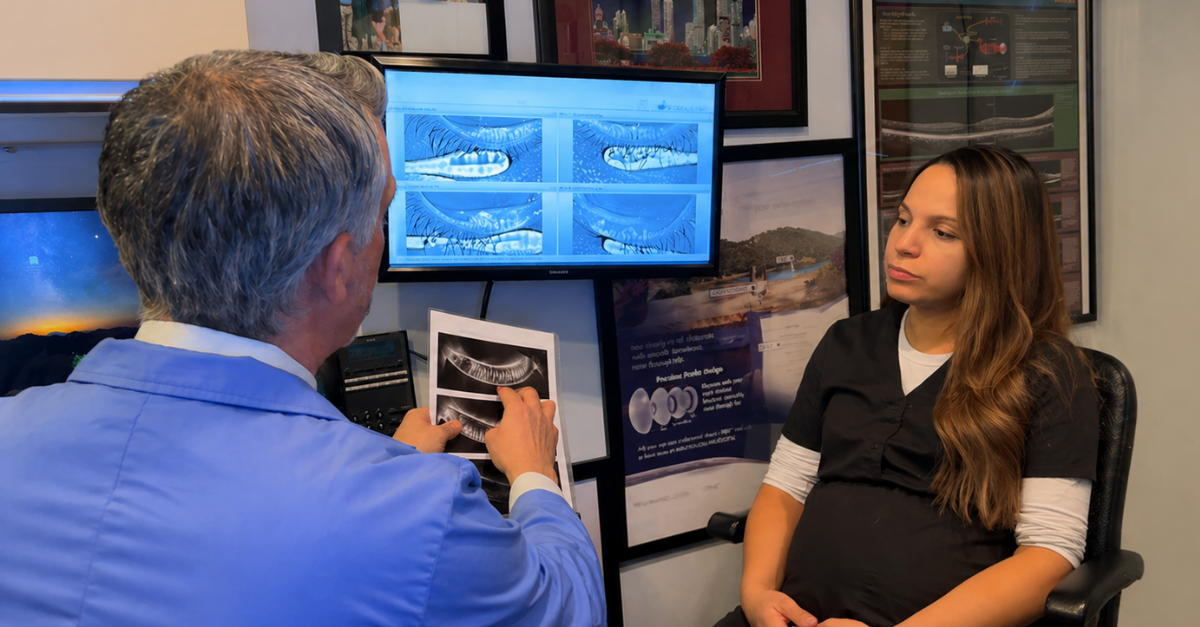
One of the most effective educational tools Dr. Cohan uses is meibography.
Many patients hear terms like “meibomian gland dysfunction” without truly understanding what the condition means structurally. Verbal explanations can only go so far, especially during a busy office visit where patients are already processing large amounts of information.
Meibography changes that dynamic because it makes the disease visual.
Rather than simply describing gland dysfunction, Dr. Cohan shows patients what healthy meibomian glands are supposed to look like and compares those images directly to the patient’s own scans. When patients can visually identify gland truncation, dropout, or atrophy in their own eyes, the condition immediately becomes more tangible and easier to understand.
That moment often changes the quality of the conversation.
Patients stop viewing dry eye as occasional irritation and begin understanding it as a chronic disease process that can progress over time. The discussion becomes less focused on symptom relief alone and more focused on long-term gland preservation, stability, and ocular surface health.
From a clinical perspective, this type of visual education creates stronger alignment between the physician’s recommendations and the patient’s understanding of the problem.
Why Education Directly Impacts Treatment Acceptance
One of the biggest challenges in dry eye management is that many treatment decisions happen after the appointment has ended.
Patients frequently leave the office and discuss recommendations later with spouses, family members, or caregivers before deciding whether to move forward. During that time, much of the original education provided during the exam may be forgotten or misunderstood.
This becomes especially important when discussing procedural recommendations, long-term therapy, or cash-pay treatments.
Dr. Cohan recognized that patient education needed to extend beyond the clinic visit itself. To reinforce those conversations, his team began using Hoot’s physician-led patient education platform to continue educating patients after the appointment.
Using personalized follow-up videos and visual educational content, patients can revisit the same explanations they received during the visit while reviewing their condition at home and at their own pace.
This type of reinforcement helps patients better retain information while keeping the physician’s guidance at the center of the experience. It also reduces the likelihood that patients rely solely on fragmented online searches or generalized internet content to make healthcare decisions.
For practices focused on improving dry eye conversion and long-term compliance, consistent education often becomes one of the highest leverage opportunities.
The Shift Toward More Visual and Personalized Education
Modern patients increasingly expect visual communication.
Across healthcare, patients are becoming more accustomed to reviewing scans, imaging, and personalized educational content as part of their care experience. Dry eye care is no exception.
Practices that rely only on verbal explanations or printed handouts may struggle to create the same level of understanding and urgency that visual diagnostics can provide.
Dr. Cohan’s approach reflects a broader shift happening throughout eye care practices that are growing their dry eye programs successfully. Education is becoming more personalized, more visual, and more continuous throughout the patient journey.
Technology certainly plays an important role in diagnosing and managing dry eye disease, but patient communication remains one of the most important factors influencing whether patients move forward with treatment recommendations.
When patients can clearly see the condition, understand the progression, and hear explanations directly from a provider they trust, confidence in treatment decisions improves significantly.
What Other Practices Can Learn
There is an important lesson in the way practices like Forsight Vision approach dry eye education.
The most effective dry eye practices are not simply presenting technology or procedures. They are creating systems that help patients understand their condition in a way that feels real, visual, and personally relevant.
Meibography becomes more than a diagnostic tool when paired with strong physician communication. It becomes a framework for education, trust-building, and long-term patient engagement.
As dry eye disease continues to grow in both prevalence and complexity, practices that prioritize patient understanding will likely continue seeing stronger treatment acceptance, higher patient confidence, and better long-term outcomes.
Dr. Cohan’s work at Forsight Vision is a strong example of how combining diagnostics, visual education, and physician-led follow-up communication can create a more effective and patient-centered approach to dry eye care.