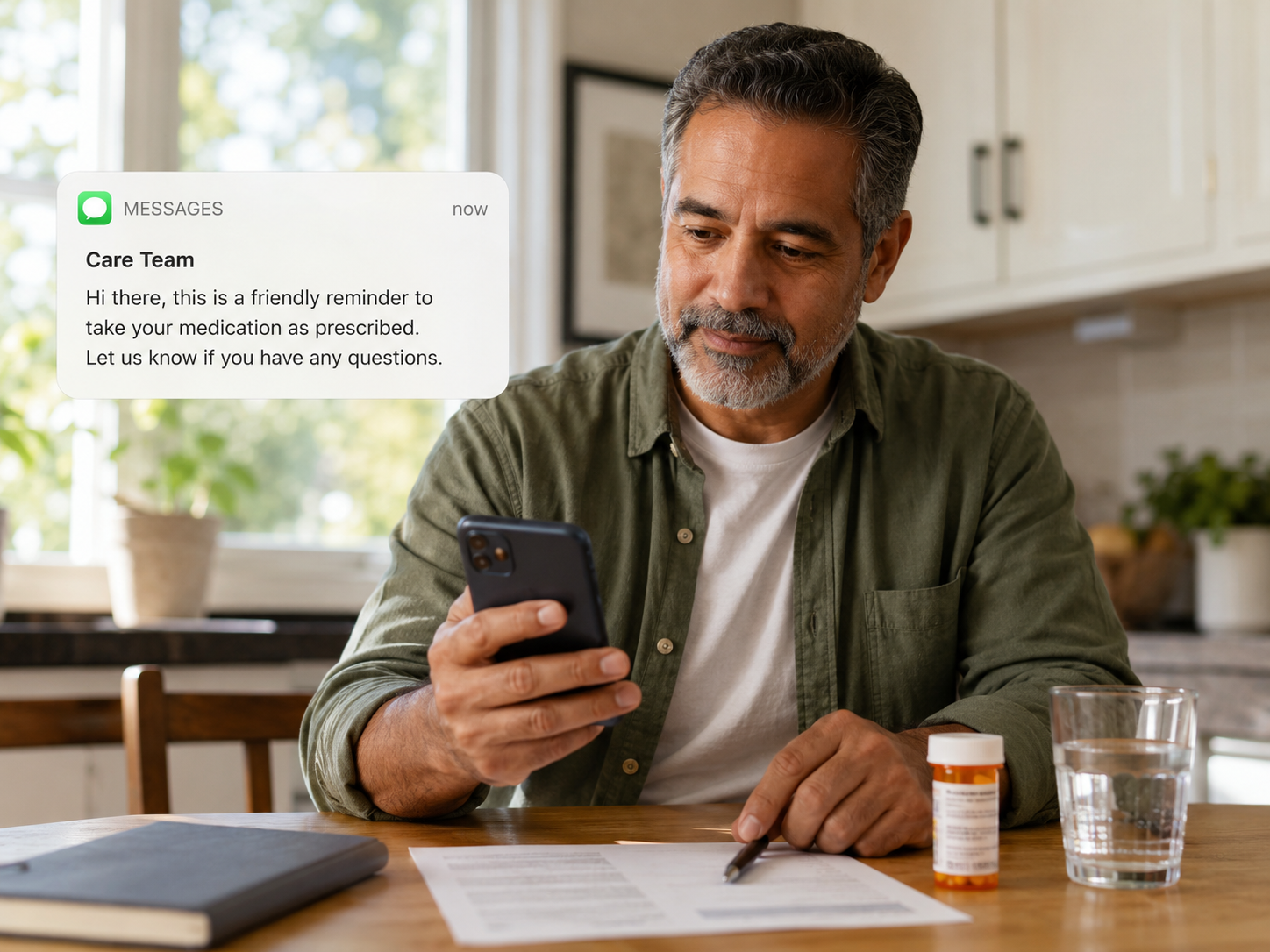
A prescription can be clinically appropriate, sent to the pharmacy, and ready for pickup.
The patient can still never fill it.
A study published in PLOS Digital Health examined whether personalized SMS reminders could improve medication adherence and reduce hospital readmissions among patients with congestive heart failure.
The retrospective study included 1,276 patients, with a median age of 76 years.
Patients received a text message shortly after a prescription was entered into the hospital’s electronic health record. The mobile experience allowed them to review their medications, confirm the pharmacy location, access written and video education, find possible copay support, and schedule another reminder.
The Results
Patients who interacted with the SMS experience had:
- 19% higher odds of filling their prescriptions
- 6% lower adjusted odds of hospital readmission
- A 92.3% patient interaction rate
- An opt-out rate of only 7.7%
The strongest results appeared among patients who had previously been readmitted.
In that group, prescription fill rates increased from 50.3% to 60.2%, a 9.9-percentage-point improvement. Those patients also had 52% higher odds of filling their prescriptions after interacting with the SMS experience.
Patients who engaged with the personalized SMS experience had 19% higher odds of filling their prescriptions and 6% lower adjusted odds of hospital readmission.
Based on findings from: Long et al., PLOS Digital Health, “Interaction with SMS text-reminders correlate with improved medication adherence and readmission rates for congestive heart failure patients.”
Why the Message Worked
This was more than a basic reminder.
The experience reached patients within minutes of the prescription and addressed several common barriers at once:
- Forgetting to pick up the medication
- Uncertainty about where it was sent
- Confusion about why it was prescribed
- Concerns about cost
- Lack of clear next steps
The study suggests that communication is most useful when it is immediate, personalized, educational, and easy to act on.
What This Means for Healthcare Organizations
Medication adherence does not begin weeks after a prescription is written. It begins the moment the patient leaves the clinical encounter.
Healthcare organizations should not rely only on portals, printed instructions, or delayed follow-up calls. Patients need clear guidance delivered directly to them while the treatment decision is still fresh.
This is where SMS and RCS can play an important role.
Hoot helps healthcare organizations extend trusted clinical education beyond the encounter through personalized video and mobile communication. The goal is not simply to send more reminders. It is to reduce confusion and help patients take the next step.
The Bottom Line
The study found that patients who engaged with a personalized SMS experience were more likely to fill their prescriptions and less likely to be readmitted. The study was observational, so it does not prove that the messages directly caused the improvement.
However, the findings reinforce a clear point:
A prescription only creates value when the patient acts on it. Timely and personalized communication can help turn a prescription written into a prescription filled.